Key Benefits of Event-Driven Architecture for Your Business
When it comes to event-driven architecture, businesses can enjoy a wide range of benefits. Here are some key advantages you can expect from event-driven architectures.
When it comes to event-driven architecture, businesses can enjoy a wide range of benefits. Here are some key advantages you can expect from event-driven architectures.
Implementing and scaling stream processing solutions can be difficult. These are the challenges you need to be aware of when working with big data streams.
This article compares top cloud and open-source stream processing frameworks. It provides an overview of the technology, explains how it works, lists the pros and cons of each tool, and gives recommendations on when to use specific stream processors based on your environment.
Trying to understand big data and data analytics? This article explains the differences between batch and stream processing, so you can make the right decision for your business.
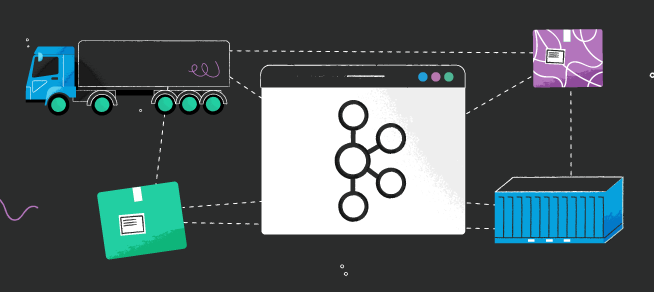
Apache Kafka is finding its way into more and more production systems. Here are ten real-world examples of how logistics companies are using Event-Driven Architecture with Kafka to manage data and digital transformation.
Do you need to handle big data? Check out this in-depth guide to event-driven architecture and learn how to design, build, and scale your systems using EDA.
A comparison of popular tools in the big data ecosystem and how they can be used together to build a modern architecture that is scalable, fault-tolerant, and cost-effective.
Apache Kafka is a distributed streaming platform that can be used for real-time data processing. In this article, we will deep dive into its architecture and usage scenarios for big data processing.
How to quickly and easily start with Kafka? Is it worth it? Let's see some code samples
Thoughts on modern data systems based on the book: new possibilities in modelling data, transactions, consistency, Big Data and polyglot persistence
Fraud-detection for high traffic load can be tricky. Let's see how to do it right way with Kafka